Why Hearing Tests Vary Between Quiet and Noisy Environments
A Saturday morning at the River Market can get loud fast. Vendors are

By: Dr. Tracy Van Es | July 26, 2026
A Saturday morning at the River Market can get loud fast. Vendors are calling out, music is drifting over from the pavilion and kids are weaving between the stalls.
Try having a conversation in the middle of all that. You may lean closer, watch the speaker’s face and piece together words you missed. Now think about the last hearing test you took in a quiet booth.
There were no nearby conversations, clattering dishes or sudden noises competing with the speaker.
Those two situations ask very different things from your ears and brain. A sound booth measures how well you hear tones and speech under controlled conditions. Real life is rarely that simple.
A busy restaurant or market gives you much more to work through than a quiet booth. You are not just listening for a voice. You are trying to follow it while music, movement and other conversations keep cutting in. That is why a normal test result does not always match what happens once you are back in the real world.
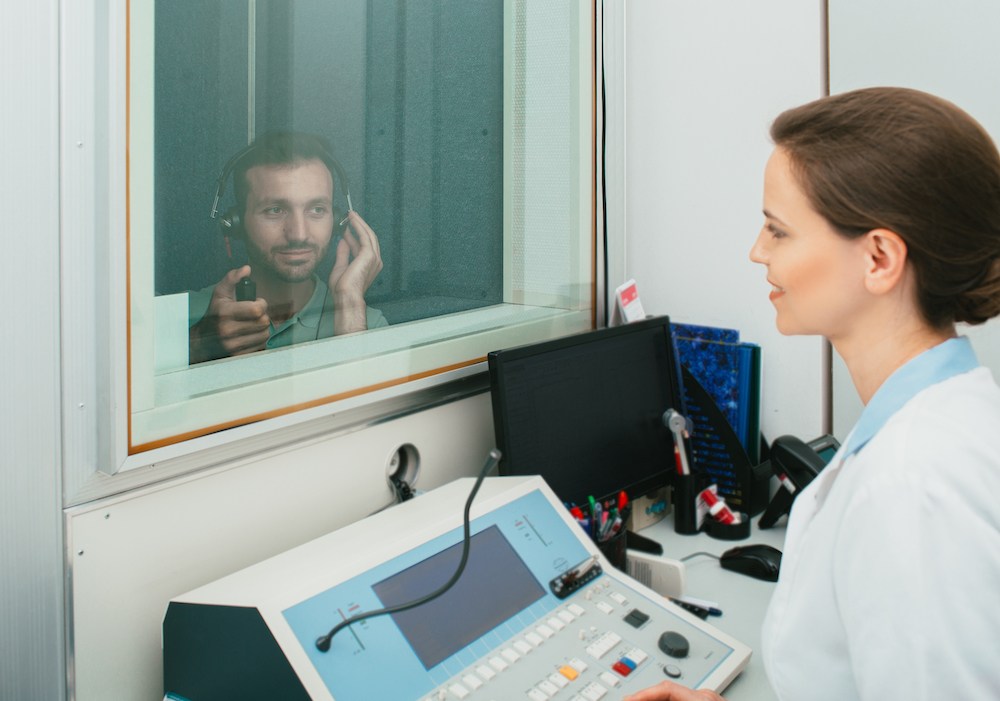
A sound booth gives the audiologist a controlled space to measure how clearly you understand speech without outside distractions. Noise can then be introduced during other parts of the evaluation to show what changes when your brain must separate a voice from competing sounds.
The exact activities may vary based on your hearing and the concerns you have described. During the evaluation, you may be asked to:
Following one voice in a noisy room requires more than hearing each sound. The brain must sort through music, dishes, nearby conversations and other distractions while filling in words that were not heard clearly.
That extra effort can make a meal, meeting or family gathering mentally tiring. By the end of the conversation, someone may remember fewer details because so much concentration went into keeping up.
People sometimes respond by speaking less, guessing at what was said or waiting for others to lead the conversation. These reactions can be mistaken for disinterest when the real problem is the amount of work required to understand speech.
A quiet sound booth removes many of the challenges that make everyday listening difficult.
The voice is clear, the room is silent and the listener knows when a word is coming. Real conversations are less controlled. Speech may compete with music, movement, clattering dishes or several other voices.
The brain must sort through those sounds and decide which voice to follow. It may also need to fill in words that were not heard clearly. That is why someone can score well in silence but still struggle in a restaurant, meeting or family gathering.
Audiologists use several types of sound to recreate different listening demands. Each one places a slightly different challenge on the auditory system, which helps show when and why speech begins to break down. The sounds used during an evaluation may include:
Mild hearing loss is easy to miss when you’re just talking with someone at home. The room’s quiet, there’s one voice to follow, and your brain isn’t working that hard. The first signs usually show up somewhere louder, when a bunch of sounds are competing for your attention at once.
Think about a backyard barbecue on a humid Arkansas evening, or a packed patio downtown on a Friday night. Music’s going, the grill’s going, and two or three conversations are happening around you at the same time.
That’s when things start slipping. You catch the start of a sentence and lose the last few words. A voice goes fuzzy the second someone turns their head or takes a step back. None of it feels alarming, it just feels like a loud night out. But it’s often the earliest sign your hearing has changed.
That’s why audiologists run something called speech in noise testing. Instead of just checking what you can hear in a silent room, it measures how much louder speech needs to be before you can actually follow it over background noise.
Your results only tell half the story until you hold them up against your actual day-to-day. Two people can post nearly identical numbers and still struggle in completely different rooms.
Your audiologist already looks at which sounds you missed and how noise threw off your answers. But what you tell them matters just as much, since it points them toward the settings and features that actually fit your life.
A few things worth mentioning:
A little preparation can make your hearing evaluation more useful. Think about recent situations where speech sounded unclear, even when the volume seemed loud enough.
Bring a current medication list and mention any recent ear infections, illnesses or sudden hearing changes. It also helps to arrive rested, since fatigue can affect concentration during speech testing.
After the evaluation, ask questions that connect the results to your daily life. These questions can help explain what the test measured and what should happen next.
Your audiologist can explain how each answer relates to your hearing. This discussion also gives you a better sense of which next steps are worth considering.
Where you stand or sit can change how much speech reaches you. Face the speaker and move close enough to see their lips, expressions and gestures. Try to place the loudest noise behind you instead of behind the speaker.
Your ears and hearing devices can then focus more directly on the voice in front.
A seat near a wall can also help reduce sound coming from several directions. Corners, kitchens, speakers and crowded walkways usually create more competing noise. Lighting matters too. A well-lit table makes it easier to read facial expressions and notice visual clues during conversation.
When you miss something, ask the speaker to rephrase the sentence instead of repeating the same words louder. It also helps to tell people which approach works best for you. A simple request to slow down, face you or speak one at a time can improve the conversation.
Hearing aids can make speech easier to follow by boosting what you need to hear and cutting down some of the noise competing with it. Your audiologist programs them around your results, how you actually listen, and the places where you struggle most to communicate.
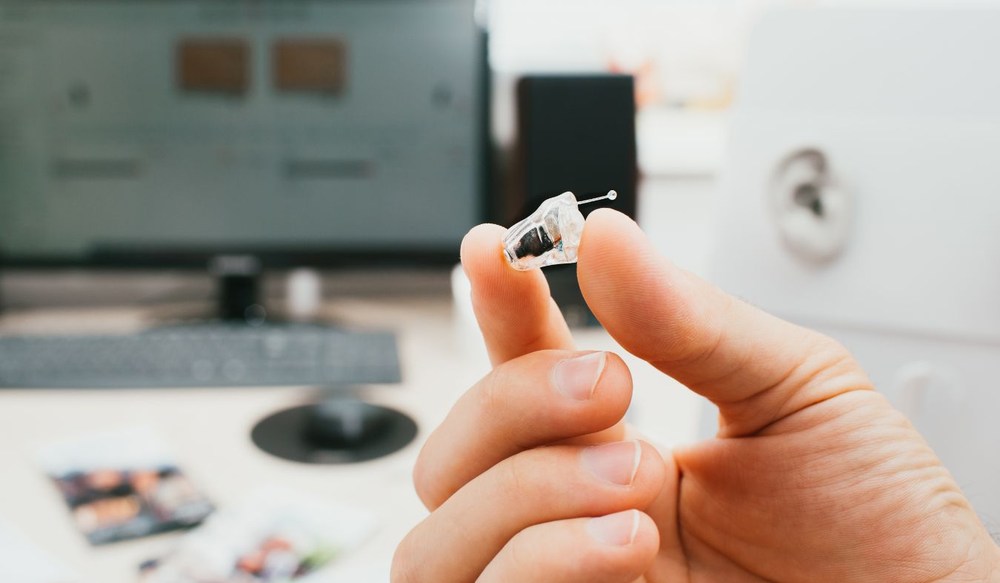
They come in a few different styles: behind-the-ear, receiver-in-canal, in-the-ear, and completely-in-canal. Each one trades off differently on how visible it is, how comfortable it feels, how long the battery lasts, and how easy it is to handle day to day. What works best comes down to your hearing loss, the shape of your ear, your dexterity, and how you actually spend your time listening.
Assistive listening devices, or ALDs, can help in specific situations too. These can connect straight to a TV, phone, or someone’s microphone, so the sound reaches your ears more directly with less noise getting in the way.
A quiet test only tells part of the story about how you hear day to day. Plenty of people do fine in a controlled setting but still struggle in a room full of chatter or a car with the radio on. Our team at Little Rock Audiology Clinic can look at both sides of that picture.
We’ll talk through where you’re actually having trouble, not just what shows up in a booth. If certain situations keep giving you a hard time, that’s worth bringing up. Give us a call at (501) 664-5511 to get a clearer picture of what’s going on.
A Saturday morning at the River Market can get loud fast. Vendors are
By: Dr. Tracy Van Es | July 26, 2026

Little Rock has a way of pulling people into the community. The River
By: Dr. Tracy Van Es | June 25, 2026
You probably didn’t think much about how winter would affect your
By: Dr. Tracy Van Es | January 19, 2026